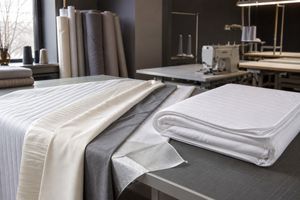
Why Fabric Density Is Not the Only Measure of Quality
When choosing bed linen, a mattress protector, a duvet or another textile product, customers often focus primarily on fabric density. It may seem that the higher the weight in grams per square metre, the stronger and better the material must be. However, density is only one characteristic and cannot determine the overall quality of a product on its own.
Here are the other factors that should be considered alongside fabric density.
What Fabric Density Means
Fabric density indicates how much one square metre of material weighs and is usually measured in g/m², also known as GSM. It affects the fabric’s thickness, weight, durability and intended use.
However, materials with the same density can differ significantly in softness, wear resistance, breathability and appearance. These differences depend on the fibre composition, weave, yarn quality and finishing methods.
Fabric Composition
Natural, synthetic and blended fibres have different properties.
Cotton is breathable, pleasant against the skin and suitable for everyday use. Polyester increases durability, helps the material retain its shape and allows it to dry faster. Blended fabrics can combine the comfort of natural fibres with the practicality of synthetic ones.
A higher density, therefore, does not always mean that a fabric will feel better or last longer. It is important to understand which fibres the material contains.
Yarn Quality
The thickness, consistency and strength of the yarn affect the properties of the finished material. High-quality fine yarn can create fabric that is dense, smooth and lightweight at the same time.
If coarse or uneven yarn is used, the fabric may feel heavy but be less comfortable, lose its appearance more quickly or develop pilling.
Weave and Construction
The arrangement of the yarns determines the structure and properties of the fabric. The weave affects how smooth, flexible, strong and breathable the material will be.
For example, a satin weave gives the surface a smooth feel and subtle sheen, while knitted fabric stretches well and adapts to the shape of the product. This is why different types of fabric should not be compared based on density alone.
Finishing and Additional Properties
The final stages of production also play an important role. These may include dyeing, softening, applying protective layers or bonding the fabric to a membrane.
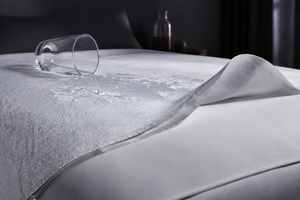
For waterproof materials, the quality depends not only on the density of the top layer but also on:
-
the quality of the membrane;
-
how evenly it is applied;
-
the strength of its bond with the textile base;
-
the material’s ability to prevent liquids from passing through;
-
comfort during everyday use.
Even a dense fabric will not provide adequate moisture protection without a high-quality membrane.
Quality of Workmanship
The quality of the finished product depends on more than the material alone. Straight seams, durable elastic straps, neatly finished edges, accurate tailoring and reliable fastenings directly affect comfort and product lifespan.
High-quality fabric cannot compensate for the wrong size, weak seams or an inconvenient product design.
How to Evaluate Fabric or a Finished Product
Before purchasing, consider the following characteristics:
-
composition and intended use of the material;
-
fabric density;
-
yarn and weave quality;
-
softness and feel;
-
breathability;
-
special finishes or the presence of a membrane;
-
quality of seams, elastic straps and fastenings;
-
care instructions.
The most important thing is to evaluate all the characteristics together and consider how and where the product will be used.
Conclusion
Fabric density is an important indicator, but it cannot determine quality on its own. Reliable and comfortable textiles result from a combination of carefully selected raw materials, high-quality yarns, the appropriate weave, professional finishing and precise workmanship.
At U-TEK HOME, materials are selected according to the intended purpose of each finished product. This allows us to create home and specialised textiles in which density, comfort, practicality and protective properties work together.